A guide to cotton bedding
Percale or Sateen? How to Choose Sheets by Weave and Feel
Two cotton sheets can begin with similar fibers and arrive at entirely different sensations. One feels crisp and matte; the other, smooth and faintly luminous. The distinction is not a trick of thread count but a consequence of how the yarns cross—and of what a sleeper wants the night to feel like.
Published October 15, 2026
There is a small moment, familiar to anyone who has made a bed in a quiet room, when the sheet is drawn taut and the surface declares itself. It may be cool and dry beneath the hand, almost papery in its composure. Or it may glide, softly, with a restrained shine. These impressions are often described as “percale” and “sateen,” words that sound like competing schools of domestic philosophy. They are, more prosaically, names for different weave structures—and they lead to meaningfully different experiences.
Choosing between them is not a matter of identifying the superior fabric. It is a question of preference, climate, laundering habits, and the particular way a person likes to settle into bed. Percale is commonly associated with a crisp, breathable, matte finish. Sateen tends toward a smoother hand and a subtle sheen. Fiber quality, yarn construction, finishing, and fabric weight all complicate the comparison, but weave remains a useful place to begin.
The distinction matters because sheets are not merely decoration laid over a mattress. They are the fabric closest to the body for a substantial portion of the day—or, at least, the portion of it in which a person is meant to be still. Their surface, airflow, and response to washing become part of the routine. A choice made by understanding construction is often more satisfying than one made by chasing an impressive number on a label.
What the weave actually means
Woven cloth is made by interlacing two sets of yarns. The lengthwise threads are called the warp; the crosswise threads are the weft. A plain weave moves the weft over and under the warp in a regular, alternating pattern. Percale is generally made with this one-over, one-under structure, producing a balanced, closely organized surface.
Sateen uses a different arrangement. In a typical cotton sateen, the weft passes over several warp yarns before going under one, or the warp yarns are arranged to create a similar pattern of longer floats on the surface. Those floats expose more yarn in a continuous direction. The result is a smoother face with a soft luster. “Sateen” refers to a weave, not to satin fiber: cotton sateen is still cotton, though the surface may feel quite different from a plain-weave cotton fabric.
That structural description sounds technical, but the practical difference is readily understood. Percale’s interlacing gives it a crisp, even character. Sateen’s longer surface floats allow the fabric to feel more fluid and polished. Neither weave guarantees a particular degree of softness, quality, or durability on its own. Those outcomes also depend on the yarns, finishing, fabric weight, and care.
Percale: the pleasure of crispness
Percale has a reputation for being cool, fresh, and a little formal. The description is not entirely metaphorical. Its matte surface and plain-weave construction give it a dry, crisp hand that many people associate with a well-made hotel bed. It tends not to cling as closely as a smoother fabric, and its open-feeling surface can be appealing to sleepers who dislike a slick or enveloping texture.
Because percale is often lightweight and breathable, it is a natural candidate for warm bedrooms and people who tend to sleep hot. Yet “breathable” should not be mistaken for a promise of temperature control in every circumstance. A sheet’s performance depends on fiber, yarn, density, finish, the room, the mattress, blankets, and the sleeper. Weave contributes to the experience; it does not operate alone.
New percale can feel firm or almost papery, especially when compared with a heavily softened sateen. For some, that is precisely its charm: it feels clean, composed, and unambiguously like a sheet. For others, the initial crispness may seem less inviting. With repeated washing, a well-made cotton percale often relaxes and softens while retaining much of its characteristic structure. It may wrinkle more visibly than sateen, a fact that can be treated as either a defect or evidence that the bed has been used.
When evaluating percale, look beyond the name. Fiber length and yarn quality influence the surface and the fabric’s ability to withstand use. Long-staple cotton, for example, can be spun into yarns with fewer exposed fiber ends than shorter fibers, contributing to a smoother, more durable cloth when properly made. Construction and finishing matter too: two sheets labeled percale may differ considerably in weight and hand.
Sateen: a smoother, more fluid surface
Cotton sateen offers a different invitation. Its surface is typically smooth, supple, and gently lustrous, with a drape that can feel more substantial than crisp percale. The longer floats created by its weave catch light differently, producing the quiet sheen that distinguishes sateen without turning it into a glossy fabric.
People who like a soft, close, almost silky hand often gravitate toward sateen. It can feel warm and enveloping, making it appealing in cooler rooms or to sleepers who prefer their bedding to settle around them rather than hold itself at a crisp distance. The same qualities can be less welcome to someone who tends to overheat or finds a smoother surface too slippery. Individual experience is the reliable guide here; the weave’s reputation is only a starting point.
Because the yarns float over more threads at the surface, sateen may be more vulnerable to snagging or abrasion than a balanced plain weave, depending on the fabric’s construction and use. This does not mean that sateen is inherently delicate or short-lived. It does mean that quality, laundering, and everyday handling deserve attention. A well-constructed sateen sheet cared for according to its instructions can provide years of use.
Its smoother face may also make creases less conspicuous than they are on crisp percale, though sateen is not wrinkle-proof. Finishing can affect how the fabric looks and feels when new, and washing gradually changes that first impression. The best expectation is not that a sheet will remain exactly as it arrived, but that it will settle into a comfortable, serviceable character over time.
The short comparison
| Consideration | Percale | Sateen |
|---|---|---|
| Typical hand | Crisp, dry, and matte | Smooth, soft, and fluid |
| Appearance | Low sheen; clean and understated | Subtle sheen; a more polished surface |
| Common appeal | People who prefer a cool, structured feel | People who prefer a smooth, enveloping feel |
| Wrinkling | Often more visible | May appear less pronounced, but can still wrinkle |
| Useful first question | Do you enjoy crispness and a matte finish? | Do you enjoy softness and a gentle luster? |
This table describes tendencies, not laws. A lightweight sateen may feel less warm than a heavy percale; a finely finished percale can feel unusually smooth. Labels help set expectations, but a hand-feel sample, a clear product description, and knowledge of the fabric’s fiber content can make the decision more precise.
Sleeping temperature and personal comfort
For a warm sleeper, percale is often the first weave worth considering. Its crisp surface and common association with breathable, lighter constructions can feel airy and less clingy. A person who wakes chilly, or simply likes a soft layer close to the body, may prefer sateen. But fabric is only one element in the temperature equation. The room’s humidity, mattress materials, sleepwear, duvet fill, and number of layers can outweigh the difference between weaves.
It is useful to ask not only, “Do I sleep hot?” but also, “What do I dislike about the sheets I have now?” Someone who feels trapped by a slick surface may find percale more comfortable even in a cool room. Someone bothered by a stiff or rustling hand may find sateen an easier fit. Comfort is not reducible to a thermometer. It is also a question of touch, sound, and how fabric behaves when a sleeper turns over.
For households with different preferences, there is no rule that every layer must match. A set of crisp sheets can be paired with a softer coverlet or blanket; a sateen surface can be balanced with a lighter top layer. Choosing the basic sheet by the sensation that matters most—and then adjusting the rest of the bed—can be more practical than seeking a single textile to solve every comfort problem.
Thread count is part of the story, not the ending
Thread count is the number of threads counted within a given area of fabric, usually expressed per square inch. It can provide context, but it is not a universal score of softness or quality. Different yarns and weave structures can produce very different fabrics at similar thread counts. A dense, high number does not automatically signal a better sheet, and a moderate number does not rule one out.
The counting method can also vary, particularly when multi-ply yarns are involved. For a shopper, the more useful questions are often simpler: What is the fiber? What is the weave? Is the fabric described as lightweight or substantial? How is it finished? Does the manufacturer provide clear care instructions and details about origin or construction?
Fiber quality deserves particular attention. Cotton’s staple length—the length of the individual fibers—can influence the yarn’s smoothness and strength. Long-staple cotton is often used in fine bedding because it can produce smooth, strong yarns, but the phrase should be considered alongside the finished fabric rather than as a guarantee by itself. The weave gives the sheet its broad character; the fiber and yarn help determine how refined and durable that character becomes.
Care habits can change the choice
Before choosing, consider how the sheets will be washed. Percale and sateen cotton are commonly machine washable, but the manufacturer’s instructions take precedence over general advice. Water temperature, detergent, drying heat, and load size all influence how bedding wears. Overcrowding a washer can prevent thorough rinsing and create unnecessary friction. Excessive heat can stress fibers and contribute to shrinkage or a harsher hand.
As a general approach, wash sheets with similar colors, use a suitable amount of detergent, and avoid harsh bleach unless the care label specifically allows it. A gentle cycle and moderate drying temperature are often sensible choices. Removing sheets promptly can limit deep creasing, though the bed will not necessarily emerge from the dryer with the smoothness of a pressed tablecloth. Fabric softener is not automatically beneficial; residues can build up and may affect absorbency or feel. Follow the specific instructions for the textile in question.
Percale’s visible wrinkles are part of its practical identity. If an immaculate, smooth-looking bed is important, regular ironing or careful removal from the dryer may help, but it adds work. Sateen may be more forgiving in appearance, yet it still benefits from thoughtful laundering. A useful purchase is one whose care routine a household can sustain, not merely one whose feel is ideal on the first night.
Washing also changes the fabric. Many cotton sheets soften with repeated laundering, but the pace and degree depend on the yarn, finish, and care. A sheet that feels firm in the store or straight from its packaging may become more comfortable with use. Conversely, a fabric treated to feel exceptionally soft at first may not retain precisely the same hand indefinitely. The ordinary life of a sheet includes change; that is not necessarily a sign of failure.
A practical way to decide
If possible, handle fabric swatches or compare descriptions from the same maker, where the fiber and general weight are held relatively constant. Otherwise, begin with the sensations you already know. Do you like the smooth, cool feel of a crisp cotton shirt, or the soft glide of a sateen-finished fabric? Do wrinkles trouble you? Is the bedroom warm? Are you willing to iron, or should the sheets be ready for the bed after a wash and a tumble in the dryer?
- Choose percale as a starting point if you prefer a matte, crisp, breathable-feeling surface and do not mind visible creasing.
- Choose sateen as a starting point if you prefer a smoother hand, gentle sheen, and fabric that drapes more softly around the body.
- Read beyond the weave name by checking fiber content, fabric weight when provided, origin, finishing, and care guidance.
- Treat thread count as context, not as a final verdict about quality or comfort.
- Give the fabric time if the care label allows it; the hand of cotton can evolve through washing and use.
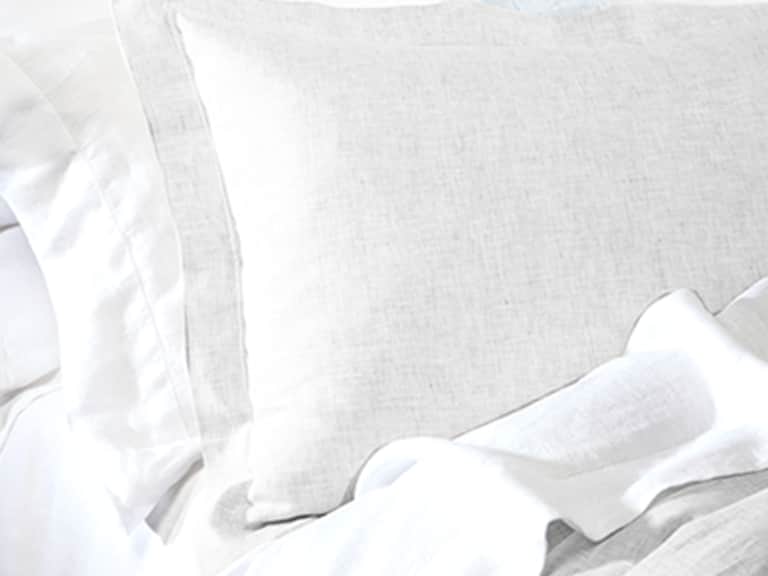
A product description can offer a concrete example of what these terms mean. The Sereno Pillowcases, for instance, are described as 100% extra-long-staple cotton percale, with a crisp yet silky hand and a hemstitch finish. That combination illustrates an important point: “crisp” and “smooth” are not mutually exclusive, and weave names describe a broad construction rather than dictating every nuance of touch.
The feel that suits the sleeper
In the end, percale and sateen offer different answers to a question most people rarely put into words: Should the bed feel fresh and structured, or soft and yielding? The first answer often leads toward percale; the second, toward sateen. Neither is more sophisticated, more natural, or more worthy of a well-made bedroom. They are two ways of organizing cotton yarn, and two ways of meeting the body at night.
For a careful choice, keep the vocabulary in proportion. Weave matters. Fiber quality matters. So do laundering, climate, and the particular sensation a person finds restful. Thread count can add information, but it cannot tell you whether you will enjoy the fabric against your skin. That judgment belongs to the sleeper.
One sheet may feel like a cool, neatly made bed in a room just aired in the morning. Another may feel like a quiet, smooth layer that follows the body without insistence. The distinction begins in the loom, but its meaning is discovered in use—after a few nights, a few washes, and the moment when the light goes out.