Textiles & Everyday Life
Why Bath Towels Feel Different: Weave, Weight, and Absorbency
A towel can be plush as a cloud, crisp as a folded napkin, or so light it seems to disappear on the hook. Those impressions are not merely matters of taste. Fiber, weave, fabric weight, and finishing all contribute to how a towel absorbs water, dries after use, and holds up to the small, repeated demands of a household.
There is a particular moment after a shower when a towel’s character becomes impossible to ignore. One wraps around the shoulders with a reassuring heft; another feels cool and almost papery until it has been washed a few times. Some take up water with brisk efficiency. Others seem to negotiate. The distinction is often described as “softness,” a useful word but an incomplete one. Towels have working lives as well as first impressions: they must absorb, release moisture, dry between uses, and survive the laundry without turning into a rough, tired version of themselves.
To understand why bath towels feel different, it helps to look beyond the shelf and into the cloth itself. A towel is a small piece of textile engineering. Its fibers supply the raw material; its weave determines how those fibers are arranged; its weight gives a rough sense of how much material is present; and its finishing can alter the hand—the textile term for the way fabric feels in the fingers. These elements interact. A heavy towel is not automatically more absorbent, and a soft one is not necessarily the quickest to dry. The best choice depends on which qualities matter most in the room where it will be used.
The loop is the working surface
Many familiar bath towels are woven as terry cloth. Their defining feature is a pile of loops that rise above the ground fabric. The loops increase the cloth’s exposed surface area, giving water more places to meet the fibers. They also create the soft, springy texture associated with a classic bath towel. Press a terry towel against damp skin and the loops make contact across a generous, textured surface; rub it between your hands and you can feel the small structures shifting under your fingers.
Loop length and density influence the experience. Longer or fuller loops can make a towel feel cushioned and substantial, but they may also take longer to dry, depending on the towel’s construction, the air around it, and how it is hung. Shorter, tighter loops can give a firmer hand and a less lofty profile. Neither arrangement is universally superior. A towel chosen for a cold bathroom, where a soft wrap feels welcome, may be judged by different standards from one used in a busy household where a quick wash and reliable drying matter more.
The loops are also the parts most vulnerable to rough treatment. They can catch on zippers, hooks, or other laundry, and aggressive pulling may damage the pile. This is one reason a towel’s apparent sturdiness is not simply a question of how thick it feels. The yarn, the backing structure, the edges, and the finishing all help determine how well the cloth withstands regular use.
What fabric weight can—and cannot—tell you
Towel weight is commonly expressed in grams per square metre, abbreviated GSM. It describes the mass of a square metre of fabric. As a practical comparison, a higher GSM generally indicates a denser or more substantial textile, while a lower GSM often points toward a lighter, less bulky one. It is a useful piece of information, particularly when comparing towels made in similar ways. It is not, however, a complete measure of quality, absorbency, comfort, or durability.
Weight is a starting point, not a verdict. Two towels with the same GSM may feel different because their fibers, yarns, loops, and finishes differ. A towel may also feel thick because of its pile while having a structure that does not perform as well as its volume suggests. The label cannot tell the whole story: a close look at the construction and a little thought about how the towel will be used are still required.
Heavier towels often have a more enveloping feel and can be appealing in a home where drying time is not a concern. They may be less convenient in a small bathroom with limited ventilation, or for someone who wants a towel that can be packed without taking over a weekend bag. Lighter towels are easier to store and carry, and may dry more readily under suitable conditions. But “lighter” does not necessarily mean “less useful.” It means the trade-offs are different.
For practical comparison, consider the towel’s intended setting. A generously sized bath towel kept beside a well-ventilated shower has one job; a compact towel expected to dry on a crowded rail has another. Weight can help narrow the field, but it should be read alongside the care instructions, fiber content, weave, and any available information about construction.
Absorbency is not the same as softness
It is tempting to assume that the softest towel will absorb the most water. The two qualities can overlap, but they are not identical. Absorbency depends in part on the fiber’s relationship with water, the amount of exposed surface, and the way the fabric is built. A plush towel may feel inviting while still needing time to take up moisture efficiently. A less lofty towel may absorb readily but feel more textured or restrained against the skin.
Finishing matters, too. New towels may arrive with residues from manufacturing or with treatments designed to create a particular hand. This can affect how the fabric behaves at first. Washing according to the manufacturer’s directions before use is a sensible way to prepare a towel and remove loose fibers or residues. The change after laundering is often part of the textile’s introduction: the towel begins as an object on a shelf and becomes, gradually, an object shaped by the household.
Care habits can influence absorbency over time. Using more detergent than necessary may leave residue that builds up in fabric; fabric softener can coat fibers and may reduce a towel’s ability to take up water. These effects vary with products and laundering conditions, so the care label should take precedence. In general, measured detergent, an appropriately sized load, and thorough rinsing give towels a better chance of staying fresh and functional. A towel needs room to move in the wash; crowding it among heavy garments can make cleaning and rinsing less effective.
There is also a difference between a towel that absorbs quickly and one that feels soft immediately. A newly washed towel can seem less plush than one coated with softener, but the latter may not perform as expected. The hand and the function are both worth considering, rather than asking one to stand in for the other.
Cotton, linen, and the texture of choice
Fiber content changes the way a towel meets the body. Cotton is widely used in terry towels because it can be woven into a looped fabric with a familiar combination of softness and water uptake. Yet cotton towels are not all alike: yarn quality, pile, density, and finishing create a considerable range of textures and performance.
Linen, made from flax, offers a different textile character. It can feel cooler, more textured, and less conventionally plush than a thick cotton terry towel. Some linen towels are designed for multipurpose use rather than as a direct substitute for the dense, looped bath towel. Their lighter profile can suit travel, the beach, or a household that prefers a towel with a flatter drape. Linen’s reputation for durability and its distinctive hand are part of its appeal, though the experience depends on the specific weave and finish.
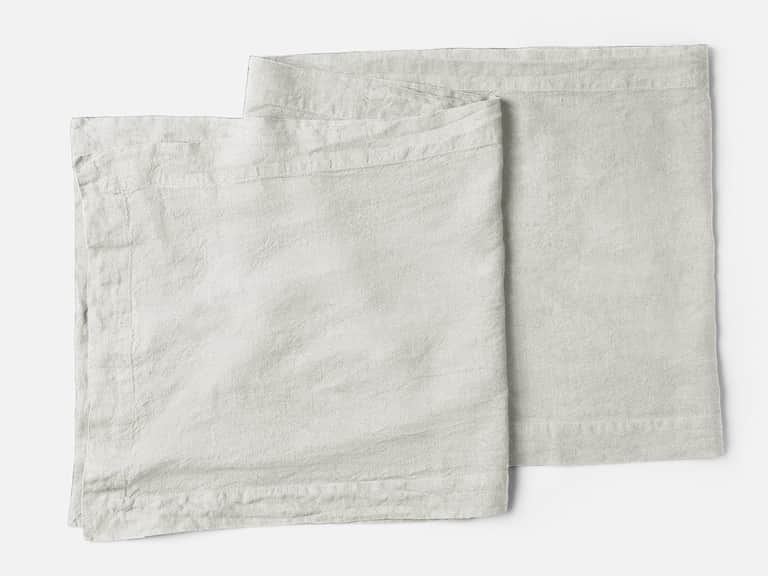
One example is The Belgian Towel Fouta Mercurio stripe, described as a washed, 100 percent linen textile with a sateen weave. Its dimensions—43 by 71 inches—make it a versatile format for bath, beach, and home use. The maker’s description emphasizes a soft hand and absorbency, while the linen construction gives it a different feel from a conventional, deep-pile terry towel. Its stated care allows machine washing or dry cleaning, with washing at a maximum of 40°C and line drying preferred. As with any textile, the care label is the soundest guide.
The comparison is not a contest between a “better” fiber and a lesser one. It is closer to choosing between different instruments. Terry offers a surface built from loops; a linen fouta offers another kind of texture and drape. A household might prefer one for stepping out of the shower and another for travel or warm-weather use. Once the question becomes “What do I want this towel to do?” rather than “Which towel is best?”, the range of answers becomes more useful.
The weave shapes the daily experience
Weave describes the arrangement of threads in a fabric. In towel construction, that arrangement helps determine surface, flexibility, thickness, and how the textile behaves when wet. Terry pile is familiar because its loops create a cushioned, absorbent surface. Other constructions may produce a flatter, more compact cloth. A sateen weave, for example, is associated with a smooth surface and a subtle sheen; the precise feel still depends on the fiber, yarn, finishing, and overall construction.
What matters to the user is not the technical name alone, but what the structure means in practice. Does the towel feel bulky or easy to fold? Does it hang neatly, or bunch up on the rail? Does it seem comfortable against the skin? Is it likely to suit the available drying space? A weave can suggest some of the answers, but the finished textile is the product of several decisions made together.
Size belongs in the same conversation. A larger towel can offer more coverage, but it also uses more storage space and may take longer to dry. A smaller one can be convenient, particularly where hooks and rails are limited, though it may not provide the wraparound comfort some people expect. Dimensions are not a glamorous specification. They are, nevertheless, the kind that becomes important when a towel has to hang in a narrow bathroom or fit into a crowded linen cupboard.
Drying time is part of performance
A towel’s work is not finished when it leaves the shower. It must dry before the next use. Drying time depends on the textile, but also on ventilation, room temperature, humidity, and how the towel is hung. A thick towel folded over itself on a damp hook will dry differently from the same towel spread across a broad rail in a ventilated room. In this respect, even a very good towel cannot overcome a persistently damp environment.
To help towels dry, hang them fully open where possible, rather than leaving them crumpled or doubled in a heap. Allow air to circulate around them and avoid placing wet towels in a closed laundry basket for long periods. These are modest interventions, the household equivalent of opening a window after rain. They can make a noticeable difference to freshness and reduce the amount of time the fabric remains damp.
When evaluating fabric weight, ask how much drying time the household can accommodate. Someone with an airy bathroom and a well-spaced rail may welcome a substantial towel. Someone sharing a small bathroom, or washing several towels in quick succession, may prefer a lighter construction. The towel’s weight can influence this decision, but it does not operate independently of the room it inhabits.
Care that respects the cloth
Towels are asked to endure frequent laundering, and the habits that keep them pleasant are often unremarkable. Follow the care label, avoid overloading the machine, use detergent in a measured amount, and make sure towels are thoroughly rinsed and dried. High heat may be unsuitable for some fibers or finishes; if instructions recommend a particular temperature, treat it as part of the textile’s design rather than a suggestion to be ignored.
It is also wise to wash towels separately from items with hooks, zippers, or abrasive hardware when practical. Those small pieces of metal and plastic can catch loops. If a loop snags, cut it with scissors rather than pulling it: a pulled loop can disturb the surrounding weave, while a carefully trimmed end is less likely to unravel further. This is one of those domestic repairs that takes seconds and may prevent a tiny defect from becoming a larger one.
Fabric softener is a matter of judgment, but frequent use can leave a coating on towel fibers. If a towel begins to feel waxy or seems less absorbent, review the amount and type of laundry products being used, and consult the manufacturer’s care advice. Do not respond to every change in texture by increasing detergent or heat. Often, the gentler course is the more effective one.
A practical way to choose
When comparing bath towels, begin with the conditions of use. Is the towel meant for a daily shower, a guest bathroom, a gym bag, or the beach? Does it need to feel plush, dry quickly, pack compactly, or serve several purposes? Then look at the fiber content and weave, followed by the listed weight if it is available. Check the dimensions and care requirements, and consider whether the bathroom has enough space and airflow for the fabric you prefer.
- For a cushioned, familiar feel: look at terry construction, pile, and the overall hand rather than relying on softness claims alone.
- For easier packing and lighter storage: consider a flatter or lighter textile and compare its dimensions with your needs.
- For frequent, everyday laundering: prioritize clear care instructions and a construction suited to the household’s washing and drying routine.
- For better absorbency over time: use measured detergent, avoid relying heavily on fabric softener, and allow the towel to dry fully between uses.
There is no universal ideal. A towel that feels satisfyingly heavy to one person may seem cumbersome to another. One sleeper of domestic habits may prize a towel that dries quickly on a narrow rail; another may want the pleasure of a thick, enveloping wrap. The useful choice is the one whose texture, absorbency, weight, and care demands make sense together.
We notice towels most acutely when they fail: when they remain damp, drag rather than absorb, or have lost the softness that first made them appealing. But a well-chosen towel is a quiet success. It hangs within reach, does its work without fuss, and returns to the hook ready for another ordinary morning. Its virtues are measurable in weave and weight, certainly, but they are also measured in the ease with which it becomes part of a life.